- 670000000
- Mon-Fri: 7:30am-3:30pm
Ngondzen Village
21Apr’25
Ngondzen is one of the 32 villages that make up Nkum Sub Division, in Bui Division of the North west region of Cameroon. Ngondzen, a 95% Christian area is boarded to the east by Memfu towards Tatum, to the west by Nkeng, to the South by Takijah and to the North by Nseh (Nseh is a clan that has one of the known Fondoms that makes up the Bui royal family and is a representative of the North west house of chieves).
The name Ngondzen is traced in two school of thought. One holds that “a very beautiful charming and irresistible lady (wanle ngon) was there and since it was across the rivers, one would describe it as going over to the land of the beautiful lady “m du e wanle Ngon dzen” and that eventually gave the name. Another school of thought holds that the land was blessed with so many rivers and so traders who were moving across either to Nigeria or to Kumbo to sell or buy their goods took it for their rest ground where they would relax, have some water to drink and water their donkeys (it should be noted donkeys were the main transporters by then) and as such, a Mbum (a descendant of Mbum land with their dialect as Limbum and their Geographical headquarter in Nkambe) trader referred to the land as “Ngo ndip” to mean a land with many streams. Since a Nso man couldn’t pronounce that, he coined “Ngo ndip” to “Ngondzen”. One or both school of thoughts should be the reason for the name of this beautiful village that ofcourse has too many beautiful ladies and as well blessed too with many streams (Like Mbim, Mah etc).
The settlement of Ngondzen may seem linear as there are many houses along the road, though disperse settlement is visible.
Ngondzen is headed by a village head in the person of Shuufaai Lun Ngondzen (Lun Ngondzen was first resident at Kimbo’ (Kumbo) where the present Lun Kimbo’ is and was caused to displace in search for safety based on a plot that was against his life as a result of a dispute amongst his fellow kingsmen . The then Shuufaai Lun settled at Ntonghi with his people just after Kikaikelaki before later moving away for fear of being located and killed.
Beside Lun, Ngondzen has 9 other big compounds namely; Doh, Lohkov, Firjiy, Tang, Rookom, Dui, Taa kong, Ki’ and Tsenmah. The traditional rulers of these compounds/families make up the village council wherein land and other minor disputes are settled every “Ntangrin” (Ntangrin is a Lamnso weekday which happens to be the Ngondzen local market day).
Ngondzen is made up of 90% farmers with main cash crops being; Maize, Vegetables like Cabbages, spices and tubers like Irish potatoes  , Carrots
  , cassava etc.
Ngonzen is a Parochial headquarter under Tatum Deanery, Kumbo Diocese with resident catholic priests and also has a convent of the Missionary Sisters of Divine Providence (MSDP) with resident Rev sisters who are into Health care and community services as part of their evangelization. Ngondzen itself has produced many priests who serve in the Lord’s vineyard. Also present include the Presbyterian Church in Cameroon (PCC). Ngondzen has a government primary school, A catholic primary school, Family Farm School ( A vocational training institution aimed at empowering youths and training them as agricultural engineers/entrepreneurs) as well as a community secondary school.
Ngondzen is blessed with so many springs at elevated border highlands that makes it easy to harness pipe born water  whose quality has stood the taste of time compared to none in the sub division. The water scheme is managed by the village development association; Ngondzen Development and Cultural Association (NDACA). The beautiful village of Ngondzen is blessed with a vast mashy area “sha'” wherein Irish potatoes, vegetables and maize are planted during the dry season. With the streams flowing down the valleys, there is no problem with irrigation.
Worth noting is the fact that Ngondzen is a great supplier of eucalyptus used for roofing, scafolding, and electric poles in the country.
More over, it is one of the first villages in Nso land to have started enjoying pipe borne water since 1964 donated by an NGO CD/HELVETAS
Ngondzen is partly electrified. Poor roads are a major set back that cause most farm products not get the desired exchange cost at the market.
Ngondzen has a district hospital with a resident medical doctor. Animal husbandry and fish farming are other agricultural domains exploited in Ngondzen. Ngondzen is such a cold place with very low temperatures with those of December and January almost getting to freezing point (kinton). Even some crops do not resist the low temperatures at this time and they die up. With the low temperatures, maize in Ngondzen is planted in March and harvested in September and even October at times.
The day set aside for Ngondzen village development and bonding is 31st December annually where Social and fund raising activities are always organized to give chance for “Ngondzenians” to raise funds for developmental projects (It should be noted; 70% of what Ngondzen is today is as a result of Community spirit and local development initiatives). If you never had this in mind, try visiting Ngondzen and thank me later (Don’t forget to get warm clothings especially if visiting during Christmas season) Any other thing you “think” about Ngondzen not mentioned here, you are on your own.
The pics below.
Pic A: An Arial view of Ngondzen
Pic B: Father’s house Ngondzen
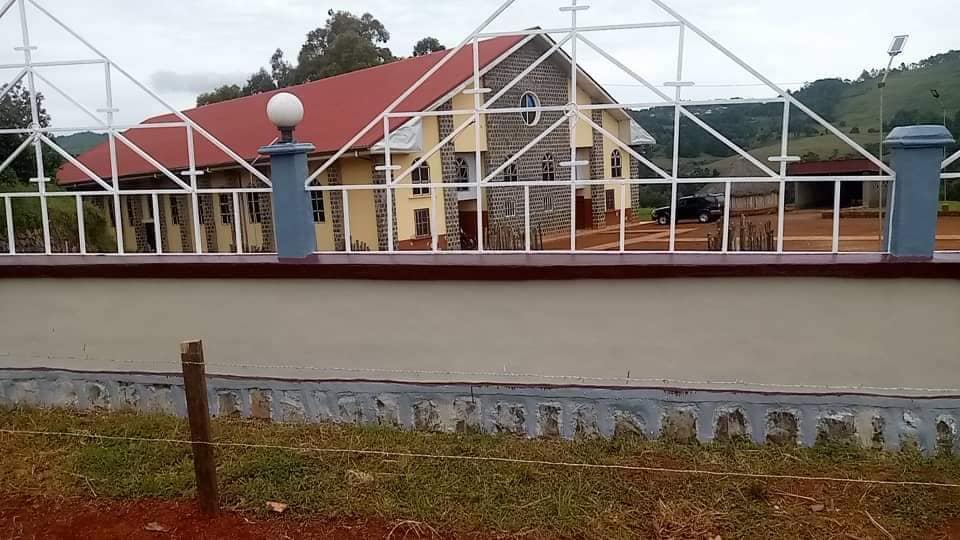
Pic C: The Catholic Church building
Pic D: The Catholic Church Premises
Leave Your Comment